 Chat With Us

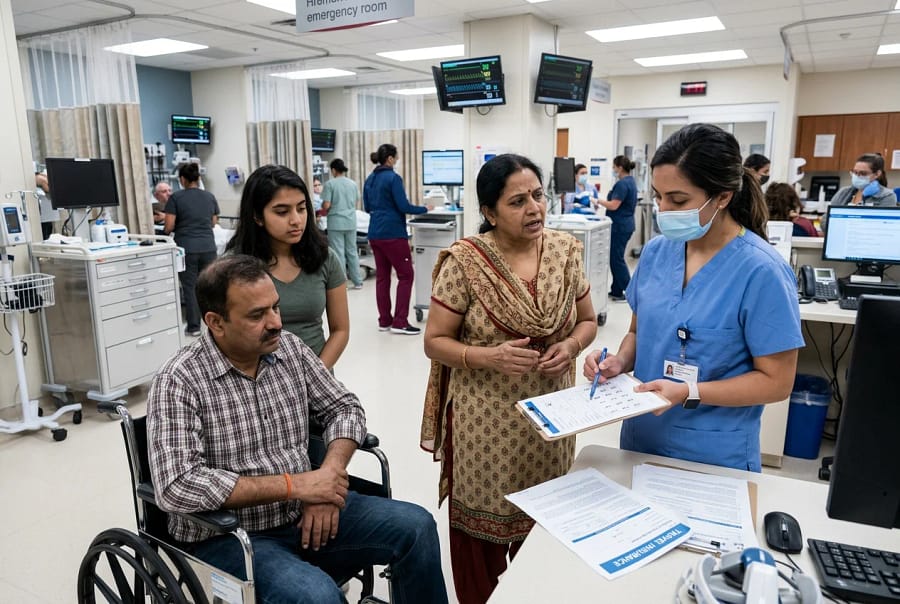
For many travelers from India, visiting the United States, purchasing travel insurance is often seen as a mere formality. Many travelers choose the cheapest policy available may it be to meet visa documentation requirements (if any) or to ensure they have some form of coverage.
However, one of the most common and costly mistakes Indian travelers make is selecting travel insurance with very low coverage limits. While the lower premium may appear attractive at first, it can expose travelers to significant financial risk during a medical emergency in the United States. Understanding why higher coverage limits matter is essential before choosing a travel insurance plan for US travel.
Low coverage limits usually refer to travel insurance policies with policy maximums such as:
These amounts may appear large when converted to Indian currency. However, they are often insufficient within the US healthcare system.
Medical care in the United States is among the most expensive in the world. A single hospitalization combined with ambulance transport and diagnostic tests can quickly exhaust a $50,000 insurance policy.
For senior travelers, the situation can be more complex. Many insurance providers place restrictions on coverage limits for travelers aged 70 and older. As a result, some seniors may only have access to plans with lower policy maximums.
This makes choosing the right plan even more important.
Consider the following example:
Mr. Kumar, a 58-year-old visitor from India, travels to the United States to visit his daughter. To reduce costs, he buys a travel insurance plan with a $25,000 policy maximum.
During his visit, he experiences severe abdominal pain and requires emergency surgery.
Total Bill: $44,800
Because his policy maximum is only $25,000, his insurance covers only part of the total cost. Mr. Kumar must pay nearly $20,000 out of pocket, which equals approximately Rs. 16–17 lakh.
In this situation, the money saved by purchasing a cheaper insurance policy becomes insignificant compared to the financial burden created by uncovered medical expenses.
When traveling to countries with very high healthcare costs, higher insurance coverage limits are essential.
Recommended coverage limits for US travel generally include:
Higher policy maximums provide protection against expensive medical situations such as:
One important fact many travelers overlook is that the premium difference between a $50,000 policy and a $250,000 policy is often relatively small.
For a modest increase in cost, travelers can significantly improve their financial protection.
Another common mistake Indian travelers make is choosing fixed-benefit plans with multiple sub-limits.
Understanding the difference between plan types is important when selecting travel insurance.
Fixed benefit plans pay a set amount for specific medical services.
For example:
If the actual bill exceeds the fixed benefit amount, the traveler must pay the remaining balance.
Comprehensive plans work differently. They cover a percentage of actual medical expenses up to the policy maximum.
Benefits of comprehensive plans include:
For travel to the United States, comprehensive plans are generally recommended because they align better with the high cost of healthcare.
| Feature | Low Coverage Plans | High Coverage Plans |
|---|---|---|
| Policy Maximum Limit | Typically, $50,000, or less | $100,000 – $1,000,000+ |
| Emergency Medical Coverage | Limited payouts may be insufficient in the US. | Strong coverage for most medical emergencies |
| Hospitalization | Often falls short for long hospital stays | Adequate for extended stays or major treatments |
| Surgical Procedures | May not fully cover surgery costs | Better protection for complex surgeries |
| Medical Evacuation | Lower limits or minimal coverage | Higher limits (~$100,000+) for safe evacuation |
| Repatriation of Remains | Often lower limits | Higher coverage limits for repatriation |
| Pre-Existing Conditions Coverage | Limited acute onset coverage (if any) | Better acute onset coverage at higher limits |
| Deductible Options | Higher deductibles to lower premiums | Lower deductible options available |
| Suitable For | Short stays and minimal risk travelers | Long stays, elderly, families, travelers with health risks |
| Premium Cost | Lower premiums | Higher premiums |
| Out-of-Pocket Risk | Higher risk of paying expenses yourself | Lower risk of out-of-pocket costs |
Most experts generally recommend at least $100,000 coverage for younger travelers and $250,000 for seniors or the highest available limit due to high medical treatment and hospital costs. Higher coverage limits provide stronger financial protection against expensive hospital treatments.
In many cases, yes. Lower premium plans often come with lower coverage limits, and limited benefits. These restrictions may leave travelers responsible for large medical bills.
If the total cost of treatment exceeds the policy maximum, the traveler must pay the remaining balance out of pocket. This can result in significant financial hardships.
Even short trips carry unpredictable health risks. Medical emergencies can occur at any time, regardless of trip length. Low coverage plans may still expose travelers to serious financial risk.
Many low coverage policies include limited medical evacuation benefits. However, evacuation costs can exceed $30,000 to $50,000 depending on the distance and medical situation. Limited evacuation coverage may not be sufficient.
Travelers should evaluate several factors before purchasing a policy:
Comparing plans carefully helps ensure adequate protection during travel.
Purchasing travel insurance with low coverage limits is one of the most common mistakes made by travelers from India visiting the United States.
The US healthcare system is expensive and unpredictable. Even a minor medical emergency can quickly exceed the limits of a low-coverage policy, leaving travelers responsible for large out-of-pocket expenses.
Instead of focusing only on saving money on premiums, travelers should prioritize adequate medical coverage.
Choosing a plan with higher coverage limits provides stronger financial protection, greater access to medical care, and peace of mind during international travel.
A well-chosen travel insurance plan is not just a travel requirement—it is a smart financial decision that protects both health and savings.


Many grandparents travel to the United States to be with their children and grandchildren.
Explore More
Yes, tourists can receive medical treatment in the United States without health or travel.
Explore More
Looking for visitor insurance for parents over 80 visiting the USA? Choosing the right.
Explore More